Performance on non-financial KPIs
Following the overview of our 2025 developments in the Delivery 2025 chapter, this section presents our performance on the non-financial KPIs applicable for the 2025 reporting year. These KPIs reflect how we delivered on our strategy across our social and environmental priorities during the year.
More information about these social and environmental topics can be found under Growth, Value and Impact in the Delivery in 2025 chapter and in the Consumers and end-users, Own workforce & Climate change disclosures in the sustainability statements. Additional information on the methods used can be found in the Basis for preparation in the sustainability statements.
“Parcels delivery quality remained high in 2025 (97%), supported by optimised network control”
Customer and consumer experience (NPS)
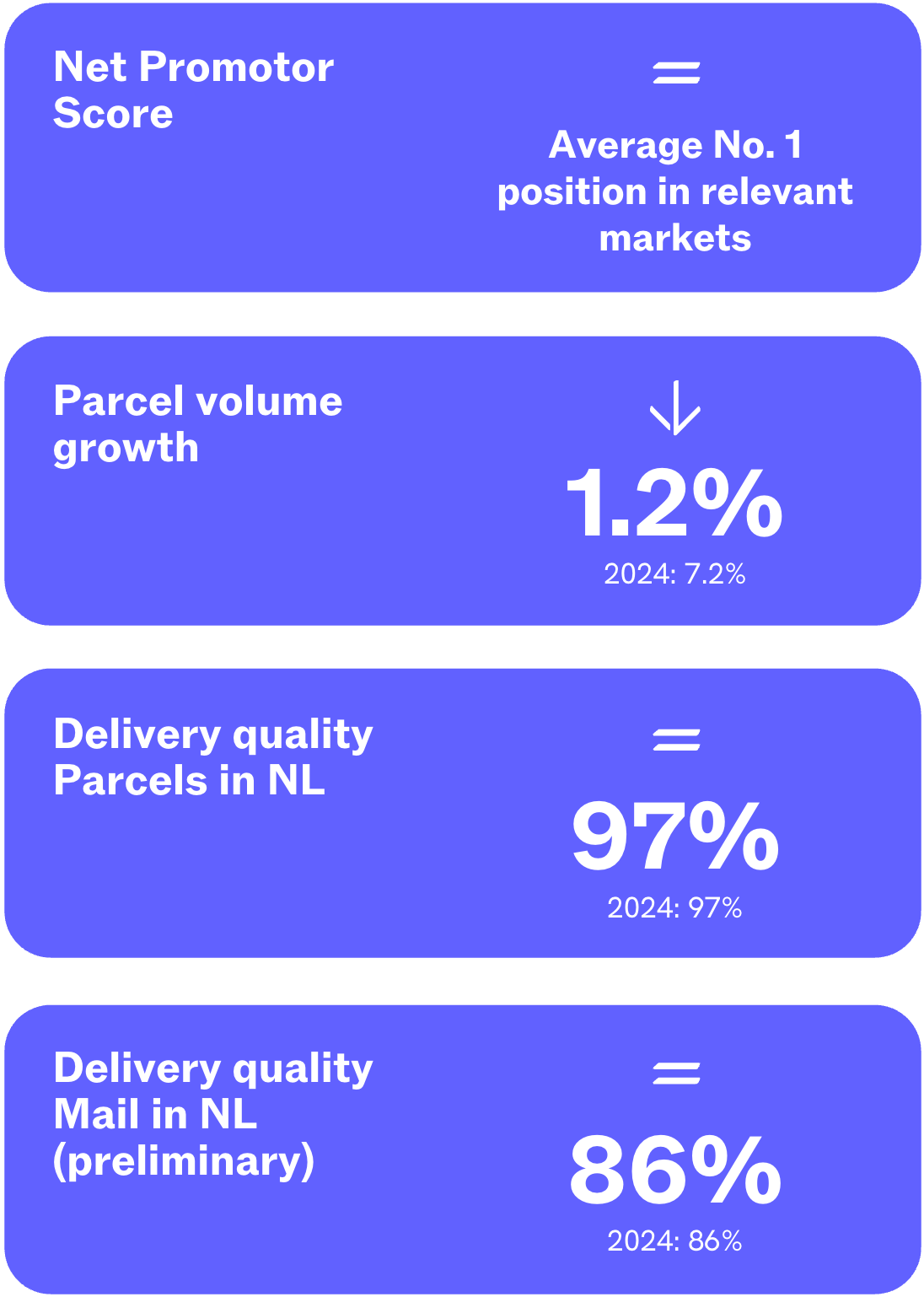
Customer and consumer satisfaction remains central to our strategy, and we continued to track their satisfaction using competitor NPS. We focus on reliability during both peak and off-peak periods, and we constantly track consumer preferences, innovate and optimise the customer and consumer journeys. In 2025, our NPS continued to reflect our strong market position and we again secured the average number 1 position in our relevant markets. We aim to maintain this position in 2026 by further enhancing service quality, digital convenience and delivery flexibility. More information on this topic can be found under Value in the Delivery in 2025 chapter and in the Social inclusion of consumers and/or end-users disclosures in the sustainability statements.
Parcel volume growth
Parcel volumes grew in 2025, reflecting a gradual recovery in e-commerce activity. We handled 376 million parcels, an absolute increase of 4 million compared to 2024. This upward trend highlights the resilience of the Dutch e-commerce market and the strength of our network. More information on this topic can be found under Growth in the Delivery in 2025 chapter and in the Social inclusion of consumers and/or end-users disclosures in the sustainability statements.
Delivery quality Parcels and Mail in the Netherlands
Parcels delivery quality remained high in 2025 (97%), supported by optimised network control. These measures strengthened reliability for business customers and consumers across the Netherlands and cross-border lanes. At Mail in the Netherlands, the preliminary next-day delivery quality was 86%, in line with 2024. This outcome reflects the reality that the current requirements are no longer achievable under existing conditions. In particular, quality of service standards have been affected by structural pressures on the postal network, including a persistently tight labour market. Labour shortages in both delivery operations and sorting centres continue to impact performance, especially in certain regions, making compliance with existing requirements increasingly difficult. The proposed adjustment to D+2 delivery as of 1 July 2026 is expected to contribute to an improvement in the current level of reliability..
More information on this topic can be found in the Value and Regulatory developments chapter and in the Social inclusion of consumers and/or end-users disclosures in the sustainability statements.
Employee engagement
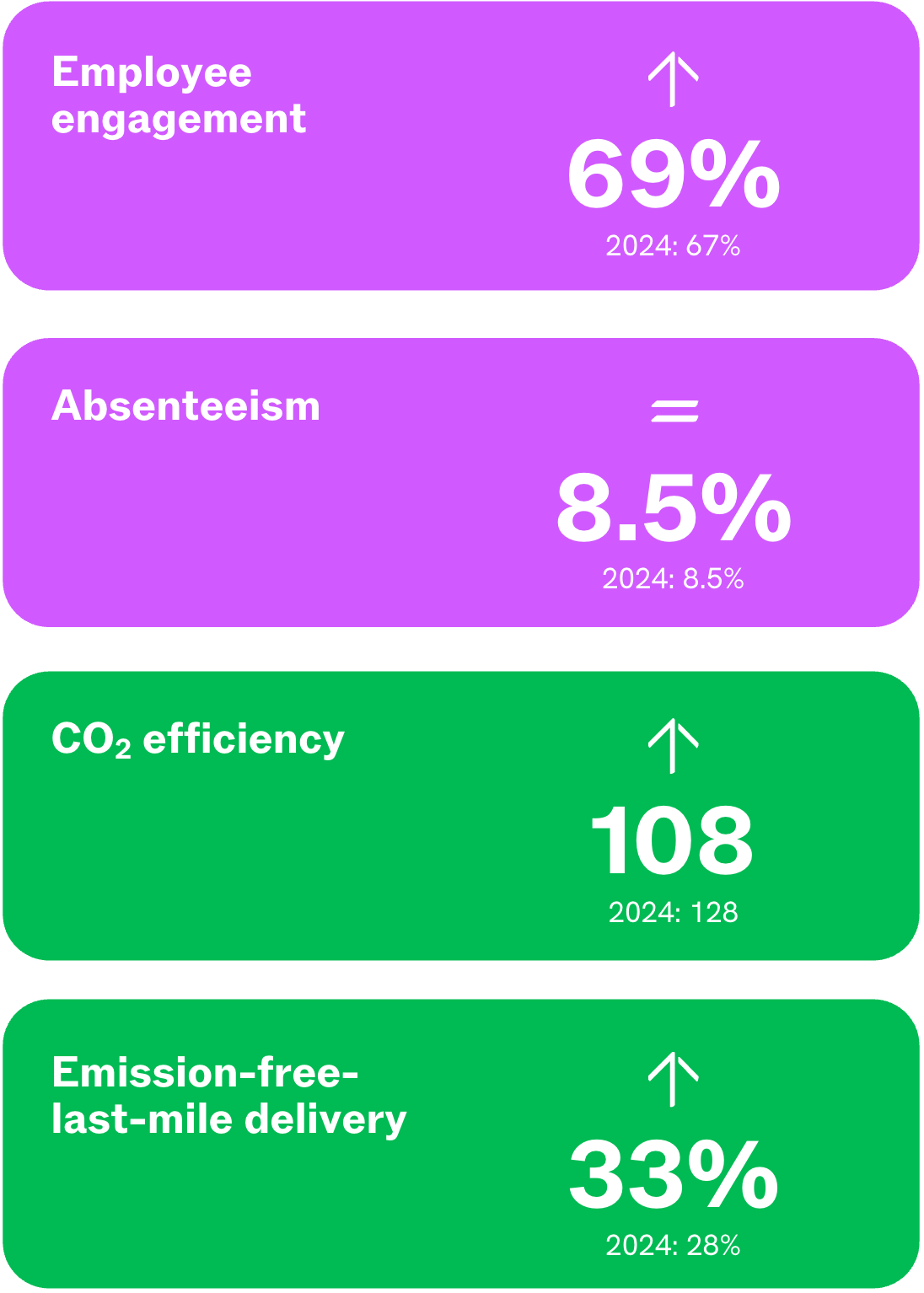
Employee engagement averaged 69% in 2025. We are pleased that employee engagement slightly increased compared with 2024, though there are variations across business segments. Engagement in Parcels showed limited improvement, while Mail in the Netherlands recorded a further increase, reflecting the impact of local initiatives.
More information on this topic can be found under Impact in the Delivery in 2025 chapter and in the Equal treatment and opportunities for all disclosures in the sustainability statements.
“We further improved CO₂ efficiency compared with 2024, driven by efficiency gains across the network”
Absenteeism
Absenteeism remained structurally high at 8.5%, reflecting broader trends in the Netherlands. We remain focused on our Managing Employability programme, alongside targeted measures to reduce long-term absenteeism, particularly related to mental and physical strain.
More information on this topic can be found under Impact in the Delivery in 2025 chapter and in the Working conditions disclosures in the sustainability statements.
CO2 efficiency
In 2025, we further improved CO₂ efficiency (scope 1 and 2 emissions in grammes CO2e per kilometre) to 108 compared with 2024, driven by efficiency gains across the network. Key levers included electrification of our fleet, increase of renewable fuels, route optimisation, and more sustainable infrastructure, such as parcel lockers, that helped reduce kilometres driven.
Emission-free last-mile delivery
By year-end 2025, 33% of last-mile deliveries were zero-emission (2024: 28%). We increased our electric vans on the road by 50%, alongside a growing fleet of cargo bikes and light electric freight vehicles in city centres. These contributed to cleaner urban environments by eliminating nitrogen oxide emissions and reducing overall air pollution from delivery traffic.
More information on these environmental topics can be found under Impact in the Delivery in 2025 chapter and in the Climate change mitigation and Air pollution disclosures in the sustainability statements.