
Q&A with our CEO and CFO
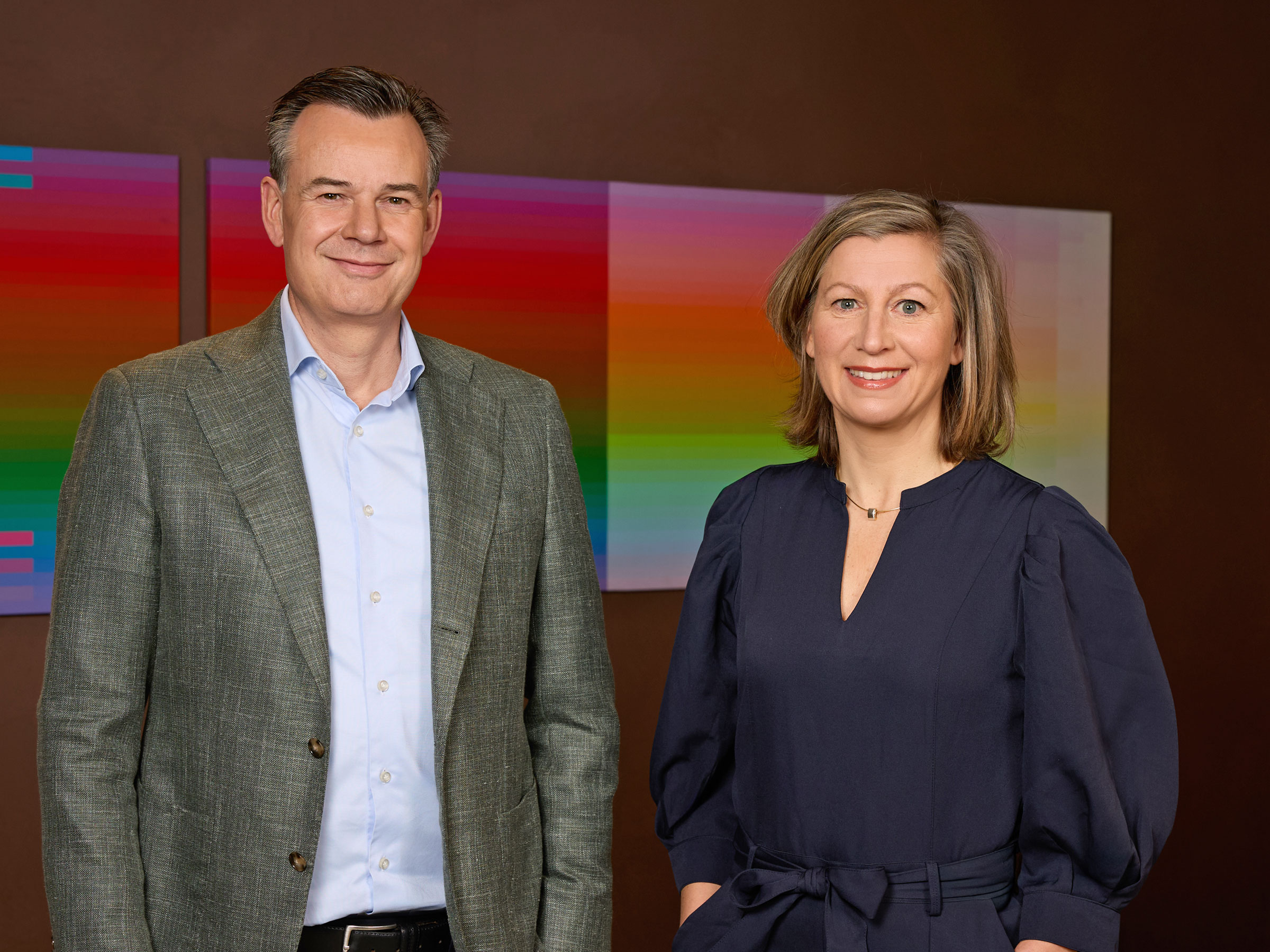
Our Board of Management, consisting of CEO Pim Berendsen and CFO Linde Jansen, reflect on 2025.
1. Last year marked a new phase in PostNL’s strategic direction. What insights were gained about the company’s position, challenges and opportunities, and how did these inform the Breakthrough 2028 ambition?
Pim: Last year was one of reflection and deliberate choices. We took the time to reassess PostNL’s position with a clear and objective perspective.
One of the key insights was the confirmation that PostNL is, and will remain, a highly relevant and trusted organisation, deeply embedded in society. For more than two centuries, we have connected people, businesses and communities, and this heritage continues to be a powerful source of strength. At the same time, we became acutely aware that the structural decline in mail volumes, persistent pressure in e-commerce logistics and a rising cost base require sharper focus, greater adaptability and disciplined execution.
A second important insight relates to the strength of our fundamentals. Our strong brand, nationwide network, international connections, scale and operational expertise provide a solid foundation. Over the years, we have consistently demonstrated our ability to adapt to changing market conditions. Our digital capabilities and our capacity to continuously reinvent our business underpin PostNL’s relevance in an increasingly fast-changing world and give us confidence in our ability to deliver on our Breakthrough 2028 ambition.
However, we also recognised that these strengths only create lasting value when deployed in a more targeted and consistent manner. This led to a set of clear strategic choices, including a focus on value-driven growth in Parcels, asset-light international expansion and a stronger emphasis on financial sustainability, higher employee engagement, improved net promoter score (NPS) and further CO₂ reduction.
These reflections formed the foundation for our renewed ambition towards Breakthrough 2028, guided by our purpose — Connected to deliver what drives us all forward — and anchored in four pillars: Value, Growth, Innovation and Impact. Together, these pillars provide a clear and credible framework to strengthen PostNL’s role as essential infrastructure and to deliver long-term value creation for all stakeholders.
Finally, despite a challenging environment, we achieved all our financial targets for 2025. Customer satisfaction and employee engagement improved, and we continued to make solid progress towards our longer-term ESG ambitions.
2. 2025 required difficult choices in balancing investments, cost control and performance. How did PostNL strengthen its financial and operational discipline while continuing to invest in its long-term ambitions?
Linde: In 2025, our focus was on maintaining a careful balance between performance in the short term and the investments required to support our long-term ambitions, building on a strong strategic foundation. Changing market conditions, evolving customer dynamics and continued cost inflation required us to further sharpen our financial and operational discipline.
We increased cost transparency and predictability through tighter budgeting and simplifications in our reporting cycle, strengthening resilience and consistency across the organisation. These measures will be continued in 2026, as they are essential to delivering our Breakthrough 2028 ambition.
At the same time, we consistently applied our capital allocation framework, prioritising investments that directly support our strategic objectives and deliver measurable long-term value. In Parcels, this meant aligning capacity, pricing and customer mix more closely with cost-to-serve. Within the network, we continued to invest in automation and reliability, building on earlier investments.
By expanding our out-of-home (OOH) network, we are improving delivery efficiency while offering consumers greater choice, convenience and predictability. Importantly, strengthened financial discipline also enhanced our future readiness by enabling more focused and effective investment decisions. We continued to invest in digitalisation, sustainability, safety and employee capabilities, recognising these as critical enablers of long-term success.
In addition, we successfully raised new debt and further strengthened our financial position, securing funding aligned with our strategic ambitions. Overall, 2025 marked a phase of consolidation and refinement. By building on existing strengths and sharpening execution where needed, we reinforced PostNL’s ability to perform consistently and to create sustainable value for all stakeholders.
3. The discussion around the universal service obligation (USO) placed PostNL at the centre of a public, political and regulatory debate. How do you reflect on the progress and setbacks of 2025, and what principles guide PostNL’s contribution to a sustainable and future-proof postal service for the Netherlands?
Pim: In 2025, the discussion around the USO increasingly highlighted the growing need for a postal framework that is economically sustainable over the long term. Declining mail volumes continued to place pressure on the system, while the legal framework had remained unchanged for many years. Over the course of the year, this led to a broader recognition among stakeholders that the postal system must be adapted to remain viable in the future.
That recognition did not come overnight. Decision-making proved slow, and the absence of timely reform resulted in prolonged uncertainty and significant net costs. Despite extensive efforts within our own sphere of influence, including stamp price adjustments and operational efficiency measures, the structural imbalance could not be resolved without changes to the regulatory framework. Ultimately, the lack of a timely and comprehensive solution led PostNL to request withdrawal from the USO designation. Unfortunately, this step has not yet resulted in a definitive outcome.
At the same time, 2025 marked a clear turning point in the debate. The focus shifted from whether reform is necessary to how, and how quickly, the postal system can be adapted to ensure long-term sustainability. In December 2025, the Minister proposed amendments to the delivery timeframe and quality requirements within the Universal Service Obligation (USO) through the Postal Decree. We welcome the fact that a majority of the House of Representatives supported this proposal, which enabled us to start the necessary preparations to be ready for implementation as of July 2026.
The scale of this change — including adjustments to schedules, logistics processes, IT systems and communications — requires timely and careful preparation. This is essential to ensure a future-proof postal service for our customers, partners and employees.
Looking ahead, it is now crucial that this momentum is maintained. 2026 must deliver concrete solutions that support a sustainable postal service for the Netherlands, provide clarity for the market and ensure that the net costs of public service obligations are addressed in a fair and balanced manner. PostNL remains committed to contributing constructively to this transition, drawing on our experience, scale and sense of responsibility to help shape a resilient postal system for the future.
4. In Parcels, 2025 required a shift towards value-driven growth. What strategic choices did you make, and how do these choices strengthen PostNL’s position in an increasingly competitive e-commerce landscape?
Pim: In 2025, we took decisive steps to reposition our Parcels activities towards value-driven growth. Market dynamics continued to evolve, with intensified competition, persistent cost inflation and rising expectations from both consumers and large e-commerce platforms. Against this backdrop, we applied greater discipline in shaping our customer mix, prioritising segments and partnerships that contribute to sustainable margin improvement. This included renegotiating contractual terms and selectively reducing exposure where value creation was insufficient.
We also strengthened our pricing architecture by introducing a more differentiated and transparent structure that better reflects cost-to-serve and service levels. Adjustments to inflation and fuel mechanisms, combined with clearer service tiers, supported improvements in average yield while reinforcing long-term commercial relationships.
Operationally, we accelerated automation and digitalisation. Investments in advanced sorting technology, AI-driven forecasting and enhanced route optimisation contributed to higher productivity, more predictable operations and more effective utilisation of network capacity, particularly during peak periods.
In parallel, we continued to reconfigure our Parcels network, increasing flexibility through a more modular design and optimised regional capacity. This enhanced our operational resilience, reduced unnecessary long-haul movements and supported our sustainability objectives.
More recently, we set a new market standard together with customers and platforms by initiating the dialogue on Best-Day Delivery. By enabling e-commerce players, logistics providers, online retailers and platforms to better balance volumes throughout the week and across the year, we are contributing to a more balanced value chain and strengthening the sector’s collective investment capacity.
5. Employees experienced significant change in 2025 as PostNL accelerated automation, redesigned parts of the network and sharpened its focus on productivity and safety. How did you ensure that employees remained engaged, supported and aligned with the new direction, and which cultural attributes will be critical on the road to 2028?
Linde: Joining PostNL in 2025 gave me a strong appreciation of the organisation’s resilience and its ability to adapt to changing customer behaviour, new technologies, regulatory requirements and evolving ways of working. Even as the pace of change accelerates, this adaptive mindset remains central to who we are.
In 2025, we actively supported employee engagement and achieved our objectives through clear and consistent communication, visible leadership and structured change support. We invested in training and continuous dialogue, while further strengthening safety by involving employees early in the design and testing of new workflows.
We also expanded our focus on wellbeing, including monitoring workload, enhancing mental health resources and improving access to support services. Our Works Council and labour representatives were closely involved in key transition steps, helping to safeguard fairness, transparency and trust throughout the organisation.
Looking ahead to 2028, our performance management culture will increasingly reinforce accountability, continuous improvement and wellbeing as essential enablers of productivity, service quality and strategic execution. These cultural attributes will enable us not only to manage change effectively, but also to shape it, ensuring that PostNL remains a reliable, modern and future-fit employer.
6. Sustainability and social responsibility continue to be defining expectations from stakeholders. Which advances in 2025 do you consider most pivotal, and how do they reinforce PostNL’s role in society?
Linde: Sustainability is embedded in our core decision-making and supports efficiency, resilience and long-term value creation. In 2025, we made meaningful progress across our sustainability and social responsibility agenda, reinforcing our position as an essential part of the Dutch economy and society. The most significant advances were achieved in emissions reduction and the further electrification of our last-mile operations.
By expanding zero-emission delivery zones and accelerating the rollout of electric vans, e-bikes and cargo solutions, we reduced our CO₂ footprint while contributing positively to the quality of life in urban areas. Our role in city logistics continued to evolve, supported by closer collaboration with municipalities and partners to develop cleaner, safer and more coordinated urban delivery solutions. These efforts keep us firmly on track to meet our science-based climate targets, while also strengthening cost efficiency, operational resilience and our leadership position.
This progress was once again recognised by the Dow Jones Sustainability Index, which ranked PostNL as the world’s most sustainable logistics e-commerce company.
In addition, community impact remained central to our approach. Initiatives such as Ik maak me zorgen empowered deliverers to signal signs of loneliness or wellbeing concerns, demonstrating how our operational scale and social awareness go hand in hand and reinforce PostNL’s role as a responsible partner in society.
7. As you reflect on 2025 as the first chapter of PostNL’s renewed journey, which decisions, milestones or shifts in mindset best signal the company’s trajectory under the new strategy, and what can stakeholders realistically expect to see in 2026 as the next steps in this transformation?
Pim: Looking back, 2025 clearly marks the year in which PostNL opened a new chapter. It was a year of deliberate choices that laid the foundation for our Breakthrough 2028 strategy and set a clear direction for the years ahead.
The most important shift was one of mindset. In 2025, we moved decisively from managing pressure within existing models to actively reshaping our portfolio and operating model to support sustainable value creation. This shift was clearly reflected in the strategic reset we presented at our Capital Markets Day.
Our new strategy is now well understood, both within the organisation and among external stakeholders, and it is already generating positive momentum. For all stakeholders, 2026 will be the year in which strategy increasingly translates into execution. This includes progress in the implementation of our new customer segmentation, the accelerated rollout of our OOH network and the application of AI-first improvements across operations, resulting in more predictable, convenient and reliable customer experiences.
Our direction is clear. In 2026, we will move from setting the scene to delivering on our strategy. We would like to thank our employees, customers and partners for their continued commitment, trust and collaboration as we move forward together.